Pakistan’s transport sector is transforming faster than ever before. An electric vehicle manufacturer in Pakistan, once dominated by imports, now focuses on innovation and domestic capability. Companies are investing in local EV production to reduce fuel dependence and strengthen economic resilience. This shift supports sustainable mobility while aligning with global climate commitments.
Modern plants rely on advanced battery technology to improve range and durability in harsh weather conditions. At the same time, government-backed EV policy incentives encourage expansion and affordability. As demand grows, electric vehicle manufacturers in Pakistan are not only building cars but also shaping the future of cleaner, smarter transport nationwide.
Overview of the Electric Vehicle Industry in Pakistan
Pakistan’s EV sector is expanding steadily. The government introduced EV policy incentives under the National Electric Vehicle Policy to promote adoption. These incentives reduce duties and encourage private investment. As a result, more companies are entering the market. Urban electrification projects are also supporting charging infrastructure in major cities.
Moreover, industry data shows rising imports of electric cars and buses over the last three years. However, focus is now shifting toward local EV production through CKD and domestic assembly. This strengthens supply chains. It also creates jobs. The growth of clean energy solutions supports this transformation and drives long-term economic stability.
Pakistan’s First Homegrown EV Company – A Major Milestone
The launch of Pakistan’s first homegrown EV company marked a turning point. It proved that local engineering can compete globally. Instead of relying only on imports, manufacturers started investing in local assembly plant operations. This reduced production costs and improved customization for local roads.
This milestone also inspired innovation in battery technology and fabrication processes. Engineers began designing vehicles for Pakistan’s climate and terrain. From compact city cars to commercial carriers, the domestic EV ecosystem started evolving rapidly. That shift laid the foundation for stronger EV fabrication standards nationwide.
Why Electric Vehicles Are Gaining Popularity in Pakistan
Fuel prices continue to climb. That alone makes electric vehicles attractive. An EV costs significantly less per kilometer compared to petrol cars. Maintenance is also simpler because electric motors have fewer moving parts. These benefits make green transportation a practical choice.
Environmental awareness is also growing. People now understand how sustainable mobility reduces urban pollution. For example, an electric car produces zero tailpipe emissions. This supports cleaner air in crowded cities like Lahore, Pakistan. In addition, faster fast charging networks reduce range anxiety. Consumers feel more confident switching to electric.
Top Electric Vehicle Manufacturers in Pakistan
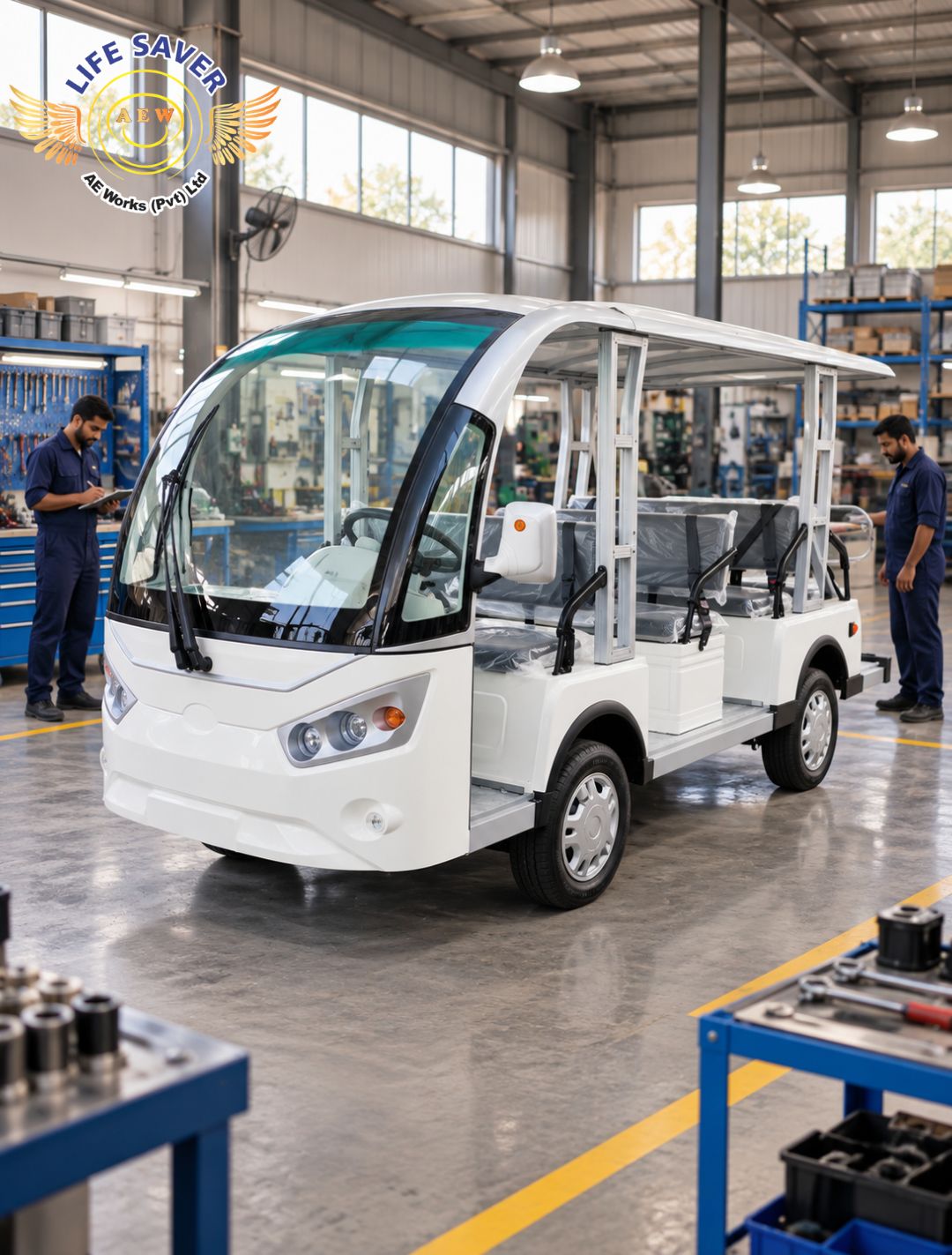
Different companies now dominate the EV landscape. They manufacture passenger cars, commercial vans, and specialized vehicles. Some focus on premium electric SUVs. Many develop public transport fleets, such as the electric shuttle bus. These vehicles support campus transport, airports, and housing societies.
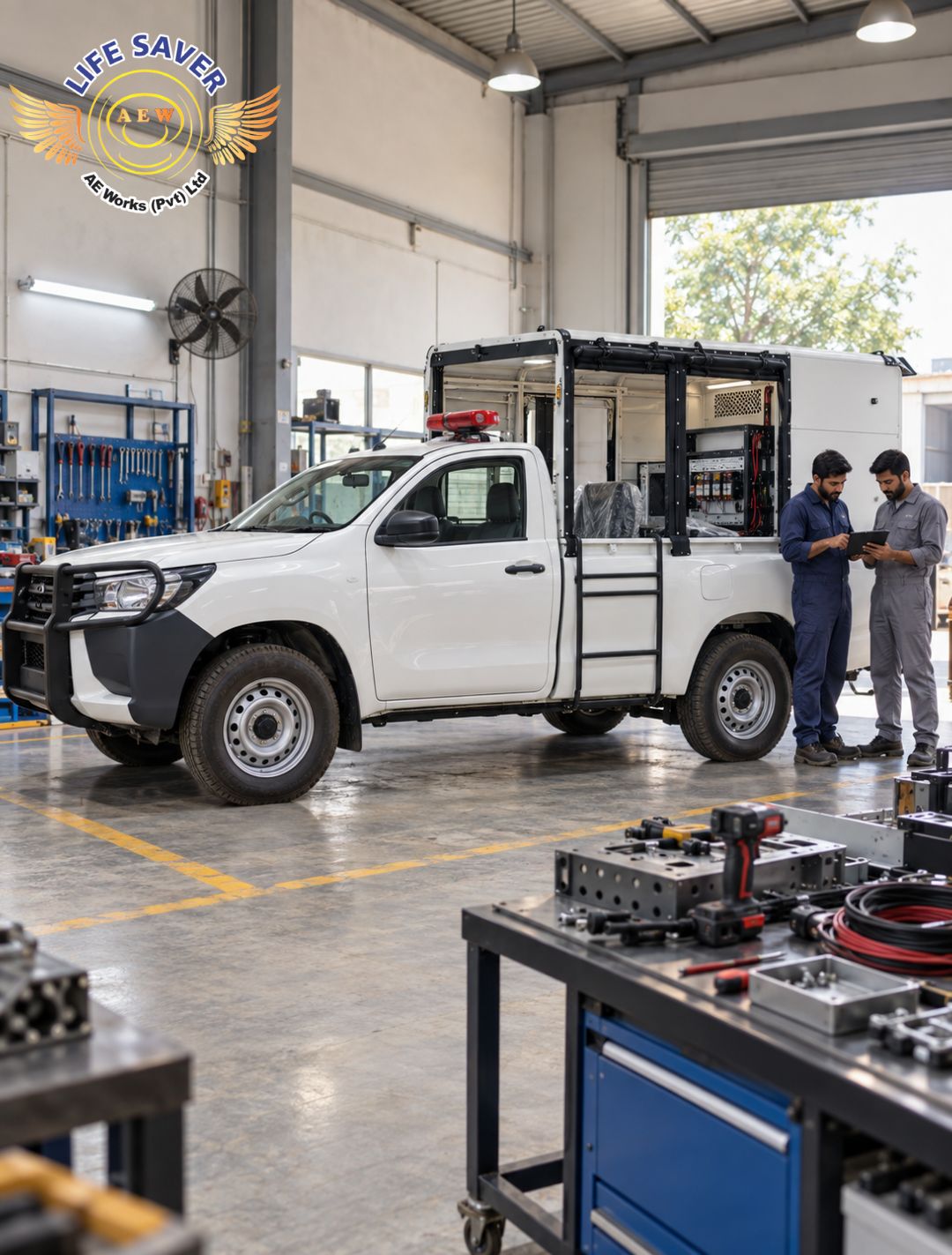
Manufacturers are also producing specialized vehicles like rescue bikes, electric cargo trucks, and emergency units. AE Works Private Limited contributes significantly to this space. Their expertise in vehicle modification and emergency builds strengthens Pakistan’s EV fabrication capabilities. This level of specialization sets local manufacturers apart from import-only dealers.
Top EV Cars in Pakistan
Electric cars available in Pakistan now offer improved driving range and smart features. Most models provide a range between 250 and 450 kilometers per charge. Modern battery technology ensures stable performance even in hot weather. Drivers enjoy smooth acceleration and silent operation.
The following table compares typical EV specifications in Pakistan.
| Model Category | Average Range | Charging Time | Market Position |
| Compact EV | 250–300 km | 6–8 hours | City driving |
| Mid Range EV | 350–400 km | 45 min Fast charging | Family use |
| Premium EV | 400+ km | 30–45 min | Luxury buyers |
These vehicles support daily commuting and reduce operating costs significantly.
Electric Vehicle Prices in Pakistan
Electric vehicle prices vary based on range and brand. Entry-level EVs start from moderate price brackets, while premium imports remain expensive. However, savings on fuel balance the initial cost over time. Government-backed EV policy incentives help reduce taxes and duties.
Commercial EVs such as cargo vans and the electric golf cart also offer competitive pricing. Businesses investing in clean energy solutions benefit from long-term cost reduction. Over five years, EV owners can save substantial amounts compared to traditional fuel vehicles.
EV Charging Stations & Infrastructure
Charging infrastructure is expanding quickly. Major cities now have public charging stations. Private housing societies also install dedicated chargers. Fast charging technology reduces waiting time to under one hour for many models.
Some companies are exploring battery swapping as an alternative. This method allows drivers to replace a discharged battery with a fully charged one within minutes. As urban electrification progresses, infrastructure gaps are gradually closing across Pakistan.
Local EV Fabrication & Manufacturing Capabilities
Local EV fabrication plays a vital role in national growth. Manufacturers now operate advanced local assembly plant facilities. These plants assemble chassis, install battery systems, and perform rigorous testing. Domestic production improves quality control.
Specialized builds such as ambulance fabrication are also gaining traction. Electric emergency vehicles reduce noise pollution and operating costs. Custom units like Toyota Hiace ambulance conversions and Suzuki Bolan ambulance upgrades demonstrate technical strength. AE Works Private Limited continues to expand expertise in emergency and commercial EV solutions.
Best Electric Vehicle Options for Different Needs
Different users require different EV configurations. City commuters prefer compact cars with moderate range. Families often choose mid-range electric SUVs. Businesses adopt cargo EVs for deliveries. Hospitals may consider electric ambulances for quieter patient transport.
For security and emergency response, vehicles like security cab units and rescue bike models provide fast mobility. Resorts and campuses benefit from the electric shuttle bus and electric golf cart. This flexibility proves that EV fabrication in Pakistan covers both personal and commercial needs.
Future of Electric Vehicles in Pakistan
The future looks promising. Government strategies aim to increase EV adoption to significant levels in the coming decade. The continuous renewable energy push will support charging networks powered by solar and wind energy.
Advancements in battery technology will improve driving range and lifespan. As new energy vehicles become mainstream, Pakistan will move closer to full sustainable mobility. Investment in local manufacturing will strengthen economic growth and reduce environmental impact.
Is Now the Right Time to Buy an EV in Pakistan?
Rising fuel prices make EVs financially attractive. Expanding charging infrastructure reduces practical concerns. Improved resale value also strengthens investment confidence.
If you seek lower running costs and support green transportation, now is a suitable time. The combination of EV policy incentives, improving electric mobility solutions, and stronger local manufacturing suggests long-term stability. Choosing an EV today means joining Pakistan’s transition toward cleaner and smarter transport.
Frequently Asked Questions
Which companies are manufacturing electric vehicles in Pakistan?
Companies like MG Motors Pakistan and local firms such as Pak Electric Vehicles (PEV) Pvt. Ltd. and Sazgar Engineering Works are involved in assembling or manufacturing electric vehicles, including cargo vans and electric three-wheelers, in Pakistan.
Is there any Pakistani electric car manufacturer?
Yes, companies such as Pak Electric Vehicles (PEV) Pvt Ltd and Sazgar Engineering Works are producing electric vans and electric three-wheelers locally, marking a move toward domestic EV production.
Who is the largest EV manufacturer in Pakistan?
The largest international EV player planning local manufacturing in Pakistan is BYD Pakistan, which aims to assemble thousands of electric and plug-in hybrid vehicles with a local partner near Karachi by 2026.
What electric vehicles are made in Pakistan?
Locally made EVs include electric cargo vans, delivery vehicles, and electric three-wheelers produced by companies like PEV and Sazgar, as well as the assembly of electric cars under partnerships like BYD and MG Motors Pakistan.
Which Chinese EV companies are operating or assembling in Pakistan?
Chinese EV giants are entering Pakistan with plans to assemble electric and plug-in hybrid vehicles through a joint venture, and brands such as MG sell EV models locally.