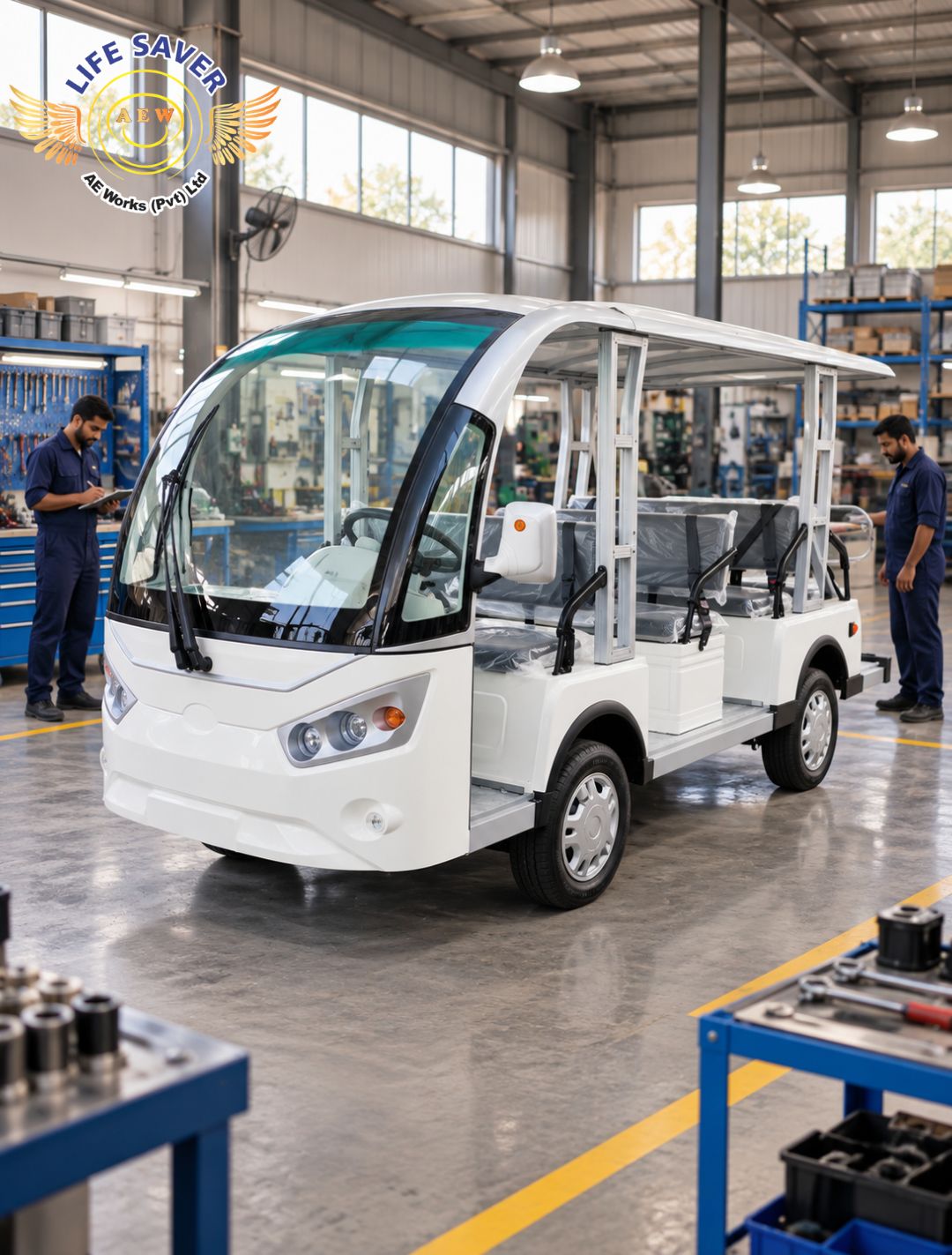
A busy campus gate tells a familiar story in Pakistan. People wait for rides while petrol engines idle nearby. A well-chosen electric shuttle can make those short journeys quieter and easier. Yet choosing an eco friendly transport vehicle in Pakistan takes more than admiring its green label. You need enough seats, dependable brakes, realistic range, and somewhere sensible to charge. For resorts, factories, hospitals, and residential communities, eco-friendly transportation starts with an ordinary question: what must this vehicle do every day?
This guide compares real shuttle options, explains electric vehicles without hype, and shows how to assess charging infrastructure, operating costs, and environmental claims before you commit to a purchase.
Why Eco Friendly Transport Vehicle Pakistan Matters Today
Cleaner passenger transport offers Pakistan something valuable: fewer exhaust fumes where people gather. Busy entrances, hospital grounds, and university pathways benefit from quieter movement. Moreover, shared electric vehicles can reduce unnecessary individual journeys. Their practical value depends on passenger demand, dependable schedules, and the wider environmental impact of electricity generation.
Pakistan’s National Electric Vehicle Policy 2025–30, launched in June 2025, targets 30% electric sales among new vehicles by 2030. This is a policy goal, not an achieved result. Meanwhile, Punjab’s electric-bus programme demonstrates interest in cleaner public transport. Private operators can pursue similar benefits through appropriately sized passenger shuttles.
What Makes a Transport Vehicle Eco-Friendly in Pakistan?
An eco-friendly vehicle should reduce avoidable pollution without compromising its actual purpose. Battery-powered shuttles use electricity rather than burning fuel onboard. Larger electric vans and trucks support some commercial applications. However, these differ from passenger shuttles. Last-mile delivery and urban logistics require cargo-focused designs rather than comfortable group seating.
Other transport choices include hybrid trucks and various hybrid vehicles, which combine fuel engines with electric assistance. Businesses also consider alternative fuels where suitable vehicles and supplies exist. Each approach has different costs and emissions. For controlled passenger routes, fully electric shuttles can offer particularly useful operational advantages.
Alternative Fuels Versus Battery-Electric Transport
Traditional alternatives include compressed natural gas (CNG), liquefied natural gas (LNG), and biodiesel. Their environmental performance depends on fuel production and actual use. Unlike fuel-burning vehicles, battery-electric shuttles produce no exhaust while driving. However, charging electricity and battery manufacturing still create environmental impacts that buyers should consider.
Electric Shuttle Buses Available at AE Works Pakistan
Choosing a practical electric transport solution begins with real products, not imagined specifications. AE Works Pvt Ltd lists four passenger shuttle configurations in its electric shuttle bus collection. They serve different group sizes and operating environments. Their listed capacity, dimensions, motor systems, and range help organizations make informed initial comparisons.
Importantly, some catalogue summaries differ from individual product descriptions. The comparison below follows those detailed model pages. Listed figures aren't guaranteed results for every route, temperature, or battery selection. Before ordering, request a written technical specification covering the exact battery configuration, passenger capacity, charging equipment, and operating conditions.
| AE Works shuttle | Seats listed | Published range | Published motor information |
| SD-8 | 8 | 80–100 km, loaded | 48–72V AC motor |
| 11-Seater | 11 | 80 km | 48–72V, 7.5 kW |
| SD-14 | 14 | 80 km | 72V, 7.5 kW |
| SD-23A | 23 | 100–200 km | 72–96V AC motor |
These are website-listed specifications, not independently measured performance results. Confirm the final range, seating arrangement, and battery specification before purchase.
How to Choose the Right Electric Shuttle Size
A shuttle shouldn't feel empty for most of its working day. Equally, queues shouldn't grow because the vehicle lacks enough seats. Start by studying daily passenger movement, journey length, waiting time, and boarding frequency. Then compare shuttle capacity with road width, turning space, and the number of journeys needed during peak hours.
For example, imagine a residential community moving 60 people from parking areas each morning. An 11-seater may provide frequent departures. A 23-seater could reduce the number of journeys when roads permit. However, route planning must consider turning circles, passenger safety, boarding time, and charging arrangements before choosing either option.
A Simple Passenger Capacity Example
Consider a shuttle with 11 available passenger seats completing six fully occupied journeys. That provides 66 passenger-trips, not necessarily 66 different people. Empty return journeys and uneven demand change actual productivity. Fleet managers should measure passengers per hour alongside daily distance rather than judging suitability through seating numbers alone.
Battery Range and Charging in Pakistan
Reliable electric mobility needs more than an impressive range figure. Heat, passengers, gradients, stop frequency, and battery condition affect actual travel distance. AE Works lists lead-acid and lithium options on relevant models. However, battery range depends on the final configuration. Don't assume every model or battery delivers identical performance.
Pakistan's electricity supply also makes careful charging schedules important. Check available electrical capacity, charger compatibility, weather protection, and expected interruptions. Charging infrastructure should support the entire operating day without creating unsafe connections or unexpected downtime. Where power outages occur, operators need a documented contingency plan rather than relying on optimistic assumptions.
Calculate Practical Range Before Buying
Suppose your shuttle completes twelve four-kilometre loops daily. That equals 48 kilometres before depot movements or unexpected journeys. Adding eight kilometres produces a 56-kilometre schedule. Compare this requirement with the chosen vehicle's real-world range, keeping a sensible operating reserve and verifying performance under typical passenger loads.
Safety and Comfort Features That Make a Difference
Passenger comfort matters most when vehicles make repeated daily stops. Smooth boarding, practical seating, visible mirrors, and clear lighting improve the journey. AE Works lists model-specific braking arrangements, including hydraulic systems and parking brakes. Its SD-8 also specifies MacPherson strut suspension and rack-and-pinion steering. Buyers should inspect each vehicle's exact safety equipment.
Useful customization can include weather curtains, seat belts, sunshades, colour choices, and selected entertainment features. Availability varies by configuration. Furthermore, suitable boarding arrangements deserve attention when transporting elderly passengers or people with limited mobility. Passenger safety should guide every change. Regulatory compliance and operating permissions also require verification before public-road use.
What Does Eco-Friendly Transport Cost in Pakistan?
The purchase price tells only part of the ownership story. Compare fuel and maintenance costs, electricity use, batteries, tyres, servicing, insurance, and possible downtime. An electric drivetrain can reduce several routine engine-related maintenance requirements. However, battery replacement and electrical repairs still matter. Request a customized written quotation because AE Works doesn't publish one fixed price for every shuttle configuration.
A proper comparison uses measured consumption and current local rates. Available government incentives may support particular electric vehicle categories, but eligibility must never be assumed for passenger shuttles. Buyers should also calculate total ownership costs over several years. That approach reveals whether operational savings justify the initial expenditure.
Illustrative Daily Energy Cost Comparison
Imagine an electric shuttle covering 60 kilometres while consuming 18 kWh. At an assumed electricity rate of PKR 50 per kWh, energy costs PKR 900 daily. A hypothetical fuel vehicle using six litres at PKR 270 per litre costs PKR 1,620. These are calculation examples, not verified AE Works performance or current market prices.
| Daily operating assumption | Electric example | Fuel vehicle example |
| Daily distance | 60 km | 60 km |
| Energy consumed | 18 kWh | 6 litres |
| Assumed unit cost | PKR 50/kWh | PKR 270/litre |
| Illustrative daily energy cost | PKR 900 | PKR 1,620 |
| Illustrative cost per km | PKR 15 | PKR 27 |
Actual savings depend on measured energy consumption, tariffs, fuel prices, battery expenses, maintenance, and vehicle utilization.
Environmental Benefits Without Misleading Green Claims
Cleaner streets begin with reducing pollution at the point of travel. Battery-electric shuttles produce zero tailpipe emissions when operating electrically. Consequently, they can reduce direct air pollution around campus buildings, hotel entrances, and residential pathways. Their quieter motors can also improve the atmosphere in places where people frequently walk or gather.
However, no manufactured vehicle has absolutely zero environmental consequences. Electricity generation, battery production, transportation, and disposal affect its overall carbon footprint. The U.S. Department of Energy explains why lifecycle emissions require broader assessment. Pakistan's electricity mix and responsible battery management therefore influence the full environmental benefit.
Why Shared Passenger Transport Matters
Carrying several passengers together may reduce repeated individual vehicle journeys. This helps when the shuttle actually replaces less efficient travel. Empty trips, excessive detours, and poor scheduling can weaken that advantage. Organizations should measure passenger numbers, electricity use, and kilometres travelled before making claims about reductions in emissions.
Where Eco-Friendly Passenger Vehicles Work Best
Purpose-built shuttles suit properties with regular, short passenger journeys. Universities can link departments with parking areas. Resorts can move guests between facilities. Factories can connect gates with employee buildings. Residential communities can improve access across larger developments. These applications differ from green logistics or sustainable shipping, which mainly concern moving goods.
Similarly, Pakistani exporters may require cleaner freight solutions throughout their supply chain. Those operations could involve delivery vans and commercial trucks rather than passenger shuttles. AE Works currently lists electric passenger shuttle models, not dedicated electric freight trucks. Keeping this distinction clear helps buyers match the vehicle to its intended purpose.
How to Select a Reliable Electric Transport Solution
Begin with your actual route rather than promotional claims. Measure daily distance, passenger peaks, turning space, slopes, and available charging hours. Next, compare the verified model specifications and inspect safety equipment. Confirm battery chemistry, charger details, maintenance arrangements, warranty conditions, and regulatory compliance for the planned location.
For organizations ready to improve passenger movement, explore the AE Works electric shuttle bus range and its completed project portfolio. Existing guidance on campus electric carts also offers useful location-specific planning. Finally, contact AE Works for a model-specific quotation and technical confirmation before committing.
A Smart Final Decision for Pakistani Buyers
A successful electric fleet isn't simply the largest or newest vehicle. It matches real passenger demand, delivers dependable service, and protects operating budgets. Clear specifications also strengthen your organization's brand image and purchasing confidence. With realistic planning, cleaner passenger journeys can become a lasting practical improvement rather than a short-lived trend.
Frequently Asked Questions
What is an eco-friendly transport vehicle?
An eco-friendly transport vehicle reduces environmental harm through cleaner propulsion, efficient energy use, or improved passenger movement. Electric shuttles are one practical example.
Which eco-friendly transport vehicles are available at AE Works in Pakistan?
AE Works currently lists electric passenger shuttle buses in 8-, 11-, 14-, and 23-seat configurations. The appropriate model depends on your transportation requirements.
What is the price of an electric shuttle bus in Pakistan?
Pricing depends on seating capacity, battery selection, customization, and equipment. Request a current quotation from AE Works for the required configuration.
How far can an electric shuttle bus travel on one charge?
AE Works model pages list approximately 80–200 km across different configurations. Actual range depends on the model, load, route, battery, and operating conditions.
Are electric vehicles environmentally friendly in Pakistan?
They produce no tailpipe emissions during electric operation. Their overall environmental impact also depends on electricity generation, manufacturing, battery management, and disposal.